Some feelings refuse to exist alone.
They don’t want a monologue. They don’t want a declaration shouted into the void. They want a pause. A reply. A contradiction. They want to be met.
I’ve been thinking about this a lot not just as a listener or a reader, but as someone who notices how emotions behave when they’re spoken with someone, not at someone.
There is a distinct style of songwriting and poetry across Hindi film music, Urdu shayari, Punjabi folk, even devotional traditions where meaning doesn’t arrive fully formed in one voice. It is built in exchange. In hesitation. In back-and-forth. In what is said, and then gently corrected, softened, refused, or deepened by another.
Some feelings, it turns out, need two voices to be complete.
The Emotional Power of Back-and-Forth
Take Agar Tum Saath Ho.
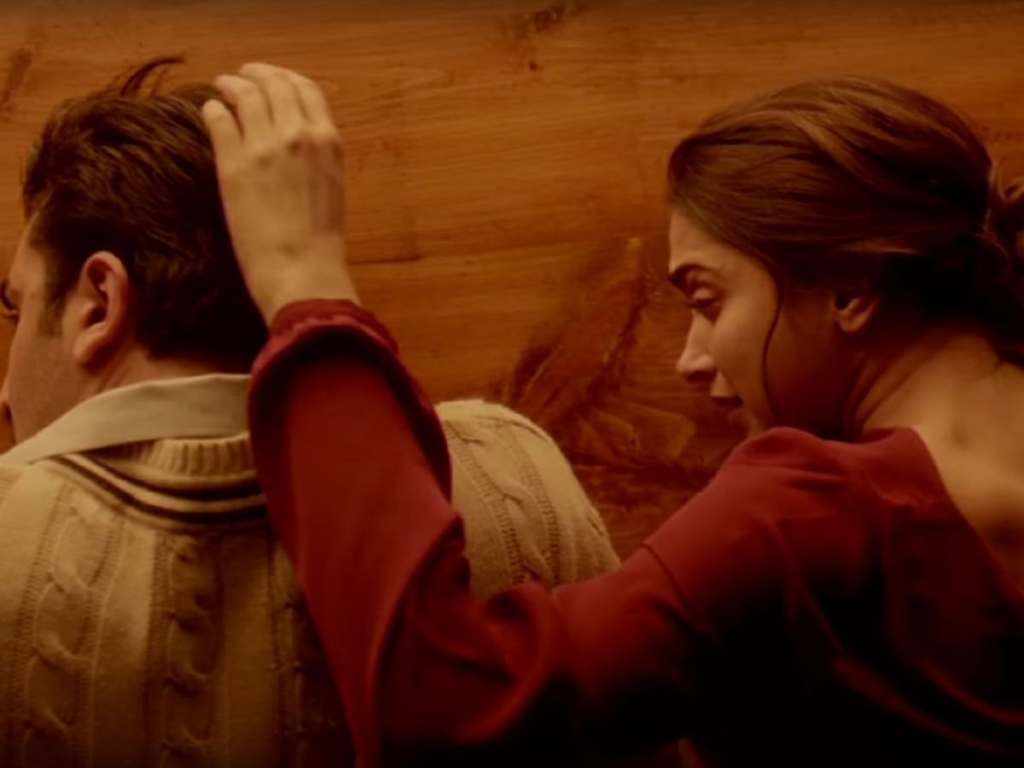
What makes the song devastating isn’t longing alone. Rather, it’s misalignment. Two people are speaking from different emotional rooms.
One voice is anchored in memory and presence: “Pal bhar thahar jao, dil ye sambhal jaaye…”
The other replies from a place of departure: “Tum saath ho ya no ho, kya farq hai…”
They aren’t arguing. They aren’t fighting. They’re simply not standing in the same emotional moment anymore.
The beauty and, also, the ache comes from the fact that both voices are true. The song doesn’t resolve the tension. It lets the distance exist between them. This is not love as a feeling; this is love as a failed conversation. That’s the magic of this form: it doesn’t tell you what to feel. It shows you how two truths can coexist and still not meet.
Ghalib, and the Art of Speaking To Someone
This isn’t new. Urdu poetry has always understood that emotion sharpens when addressed.
Ghalib, especially, was a master of mu‘amalah bandi (the poetry of exchange) and waqiah goi (situational, lived moments). Even when he sounds like he’s speaking alone, there is almost always an implied listener: a beloved, a rival, God, or his own divided self.
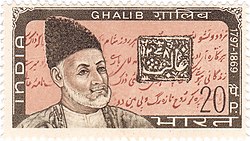
One line from his lesser-known verses stays with me:
Ay ghunchah-e-tamanna, ya‘ni kaf-e-nigarin
Dil de to hum bata den, muthi mein teri kya hai
O rosebud of my longing, your palms adorned with henna—
If you give me back my heart, I’ll tell you
what it is you’re holding in your fist.
This isn’t a confession. It’s a negotiation. It’s teasing.
The emotion doesn’t sit passively. It waits for a response. Meaning will only be revealed if the other person participates. That would be what closes the cycle. Without that second voice, literal or imagined, the feeling remains unfinished.
That’s what makes this style feel alive. It doesn’t perform emotion. It enacts it.
When Romance Sounds Like Conversation, Not Poetry
Hindi film music does this beautifully when it resists grand metaphors and lets dialogue do the work.
Agar Main Kahoon is one of the purest examples of this conversational lyricism. One voice offers a compliment, almost shyly:
Agar main kahoon
Ye jo chehra hai
Jaise koi chaand hai
Toh kya kahogi?
And the reply doesn’t accept it. It reframes it:
Main tumse kahungi
Mujhko bhool se bhi chaand tum na kaho
Chaand mein toh kai daag hain…

The intimacy here doesn’t come from praise. It comes from being corrected. From being known well enough that the other person can say, “That metaphor doesn’t fit me. Try again.”
That’s rare. To be that close to someone that you can correct them.
Even something as seemingly simple as Bade Achhe Lagte Hain carries this energy. It sounds like a monologue, but emotionally, the beloved is right there listening, receiving, holding the weight of what’s being said. The song works because it feels face-to-face, not performative.
Playfulness, Teasing, and Everyday Dialogue
This style isn’t always heavy. Sometimes it’s playful, even silly.
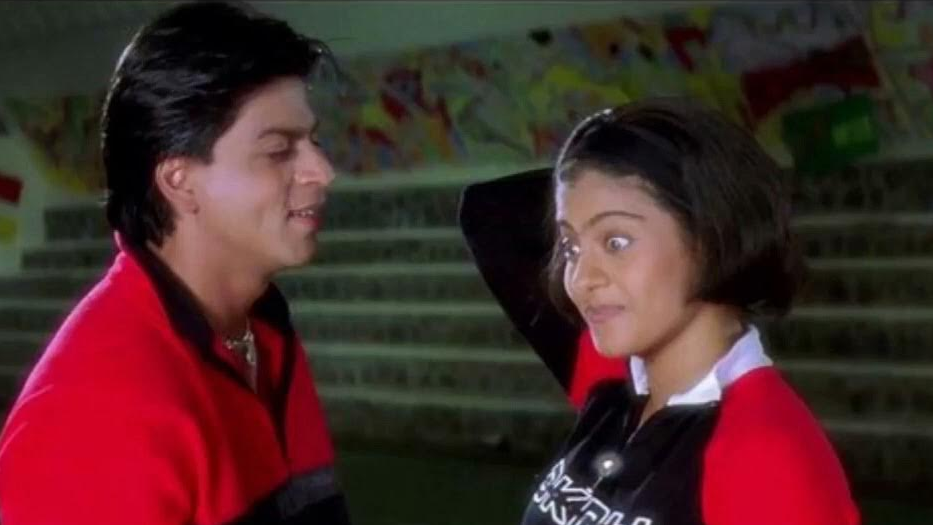
Think of Yeh Ladka Hai Deewana from Kuch Kuch Hota Hai where friendship unfolds through curiosity, commentary, and banter. Or Jaane Kyun Log Pyaar Karte Hain where the song feels like a question asked out loud, not a thesis statement.
In Punjabi folk traditions, tappay and boliyan thrive on this energy with teasing replies, half-truths, exaggerated comebacks. Even qawwalis often operate as a call-and-response, whether between lovers or between the devotee and the divine.
Across contexts, the structure stays the same:
emotion is relational, not solitary.
Why This Form Feels So Real
I think this style stays with us because it mirrors how we actually live.
Most of us don’t arrive at clarity alone. We arrive at it mid-conversation. Or after someone interrupts us. Or when someone misunderstands us and we have to explain again.
Dialogue allows space for contradiction. For softness. For humour. For refusal. It lets feelings breathe. Solo songs tell you what someone feels. Conversational songs show you what happens when feelings collide.
That’s why they linger. That’s why they hurt differently. That’s why they feel truer.
Why I Keep Coming Back to It
What this style ultimately teaches us is not just how to listen to conversation, but how to listen to absence.
When we start seeing emotions through this two-voice lens, conversations stop being just exchanges of words. They become sites of meaning. And silences stop being empty — they start carrying structure, weight, and intention.
In monologic forms, silence often feels like a failure. Something unfinished. Something lacking courage or clarity. But in conversational forms, silence can be the reply that never came, and that changes everything.
Think again of Agar Tum Saath Ho.
The song doesn’t end with agreement. It ends with distance. And yet, that distance feels complete because both voices were allowed to exist fully before the silence set in. The lack of resolution isn’t a gap; it’s the point.
Even in lighter, playful songs with teasing exchanges, gentle corrections, flirtatious back-and-forth, the magic lies in mutual presence. In being seen closely enough to be answered specifically, not generically.
And maybe that’s the real invitation here. To start listening to our own lives not just for what was said but for who was speaking, who replied, who couldn’t, and who chose not to. To understand that some feelings don’t end when conversation stops. They end when dialogue becomes impossible. And sometimes, they don’t end at all, they simply change shape, becoming memory, poetry, music, or quiet knowing.



 The Devil is in the Dee-tails :)
Leave a comment