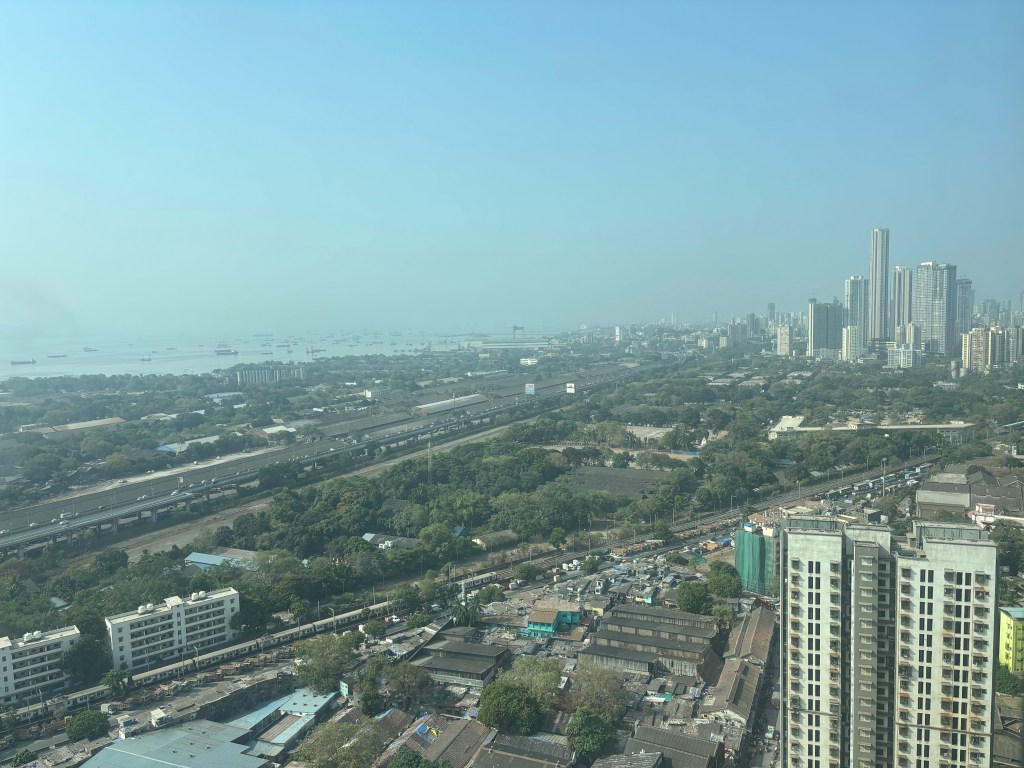
I am writing this from Bombay. Which means I am writing this from a city that has absolutely no idea who I am.
It doesn’t know my order. It doesn’t know my shortcuts. I walked around Worli the other day and everyone was mid-something: mid-conversation, mid-cigarette, mid-life and I was just passing through the frame. Nobody’s regular. Nobody’s person. A stranger in a city already deep into its own plot before I arrived.
This is a specific feeling and I’ve felt it enough times now to know it has a shape. It arrives when you’re standing in a living room that isn’t yours yet, waiting to unpack, waiting to clean, waiting for the room to become somewhere you recognise. It arrives when the roads are emptier than usual because it is a Sunday, no traffic. And the quiet makes everything feel slightly more temporary than it is.
Khaali kamra, khaali sheher.
Both waiting for you to do something about them.
It’s not loneliness exactly. It’s more like: the city is a conversation you’ve walked into mid-sentence, and everyone else already knows what they’re talking about. I’ve moved enough times now to understand that this feeling doesn’t last. It just feels like it will. So I’m trying to pay attention to it while it’s still here. The before, the specific quality of a place before it becomes yours, before it has any memory of you in it at all.
Every City has a Personality
The thing I’ve learned from moving around is that cities aren’t neutral. They have personalities and actual ones, consistent ones, the kind that reveal themselves in small unperformed moments. Not in the monuments or the food guides or the things people tell you to do. In what happens on a random Tuesday when nobody is being cinematic about it.
I grew up in Muscat. Which means Muscat is too foundational for me to see its personality clearly. It’s the baseline, the thing I measure everything else against without meaning to. Petrol pumps and salt air and warm concrete. Every new city I arrive in, some part of me is quietly comparing it to Muscat. Not fairly, not consciously. Just: the nose knows what home smells like, and it keeps checking.
Delhi I have never officially lived in but have never fully left either. It’s been a second home my whole life for vacations, in-betweens, the city you pass through on the way to other things and somehow keep returning to. Delhi’s personality is the person who has been everywhere, knows everyone, and will tell you about it unprompted. It smells like the past but not in a sad way, in a this-city-has-existed-for-centuries-and-knows-it way. The architecture carries it without apology: Mughal archways next to metro stations, gardens that have been beautiful for five hundred years and haven’t stopped. Delhi doesn’t explain its history to you. It just continues to have it, loudly, in your presence. I am a gardens-and-museums person in Delhi, a daytime person, which means I’ve always known the quiet version of a famously unquiet city. That version is mine. And the people, specific people, specific friendships made Delhi mine before any place within it did. That’s a different kind of belonging, less permanent, more dependent on who picks up the phone. But real.
Lucknow I actually lived in, which means Lucknow and I had to negotiate. It’s the city that greets you with warmth and then gives you nothing for free. Tehzeeb on the surface, quietly shrewd underneath which is not a criticism, just Lucknow being Lucknow. It smells like warm food and somehow smug attitude. It knows it has the best food in the country and it has stopped pretending to be humble about this. You will eat the samosa and you will say thank you and Lucknow will nod like it expected nothing less. It was never fully home because the city itself stayed at arm’s length, something I couldn’t quite crack. But my house became home, because I made it mine: things on the walls, corners arranged the way I wanted them. And slowly, small things accumulated in the city too. The samosa shop near the Shiksha Vibhaag where I worked. Hazratganj Social, became mine not because Lucknow gave it to me but because I showed up enough that it started giving something back. The city stayed smug. I stayed anyway. And somewhere in that stubbornness, a few corners of it became mine.
Kochi was mine immediately, which has never happened before or since. First work location, first city I lived in as a person with full free will figuring out what kind of person she was going to be. It received me with salt air and green light and people who have the specific ease of somewhere that has always been beautiful and hasn’t had to fight about it. The warmth there doesn’t perform itself because it’s just present, underneath everything, the way base notes work. When I think about going back to build something there, the image hasn’t shrunk. Kochi is still full-size in my head, still the same as when it first held me. I think that means I left before it became ordinary. I’m glad I left before it became ordinary.
And then Bombay. I’m still figuring out Bombay’s personality, which is perhaps the point. It doesn’t offer itself to you quickly. What I can tell you so far is that it doesn’t wait. It was mid-scene when I arrived and it will be mid-scene when I leave and it doesn’t particularly notice the difference. This is not unkindness. It’s just a city that has too much going on to make space for your adjustment period. You adjust or you don’t. The city continues either way.
The Street Fight
Two days after I arrived, I saw a fight on the street.
Not a serious one but the kind that starts over something small and escalates to everyone in the vicinity having loud opinions about it, voices overlapping, someone’s auto blocking half the road, someone explaining that they are definitely not the problem here. And my first thought, immediately and involuntarily, was: yaar, this is so Delhi. Then: this is so Lucknow.
And then I stopped and thought ki lol no. This is just streets. This is just people doing what people do when something annoying happens on a Monday and nobody is being cinematic about it. This is every city. This is all of them at once.
And something shifted. Because I wasn’t watching it from outside anymore and I was in it, present, part of the Monday. And it felt, briefly, like the first honest moment between me and Bombay. Not the version I’d projected onto it, not the cosmopolitan-non-stop-good-cafes version I’d carried in my head on the way here. Just: a city being a city, chaotic and loud and mid-something, exactly as it is.
Bombay didn’t turn out to be an idea. It turned out to be a place. Which is better, actually. Places you can live in. Ideas just sit there looking expensive.
What I know now about Belonging
The more I go out, the more mine it gets. The more I decorate my room, the more mine it gets. The rest just happens.
I used to think belonging to a city was something it gave you. Maybe some warmth, a welcome, some signal that you had been accepted. Kochi gave me that and I held it like proof. But Lucknow taught me something more useful: that you can belong to corners of a city without the city ever fully belonging to you. A samosa shop. A social. A street you take not because it’s fastest but because you like it. Belonging, I think, is less about the city deciding you’re its person and more about accumulation: one small thing, then another, then another, until you look up one day and realise you’ve been someone’s regular for months without noticing.
Delhi reminded me that you can belong to a city through its people before you belong to it through anything else. Which is the most portable kind of belonging as it moves with the people, not with the place. Riskier, but warmer.
And Muscat reminded me just by being what it is, by being the thing I compare everything to that the first city that holds you holds you forever, in the baseline of your body, in what your nose thinks home smells like at 2am when you can’t sleep in a new place.
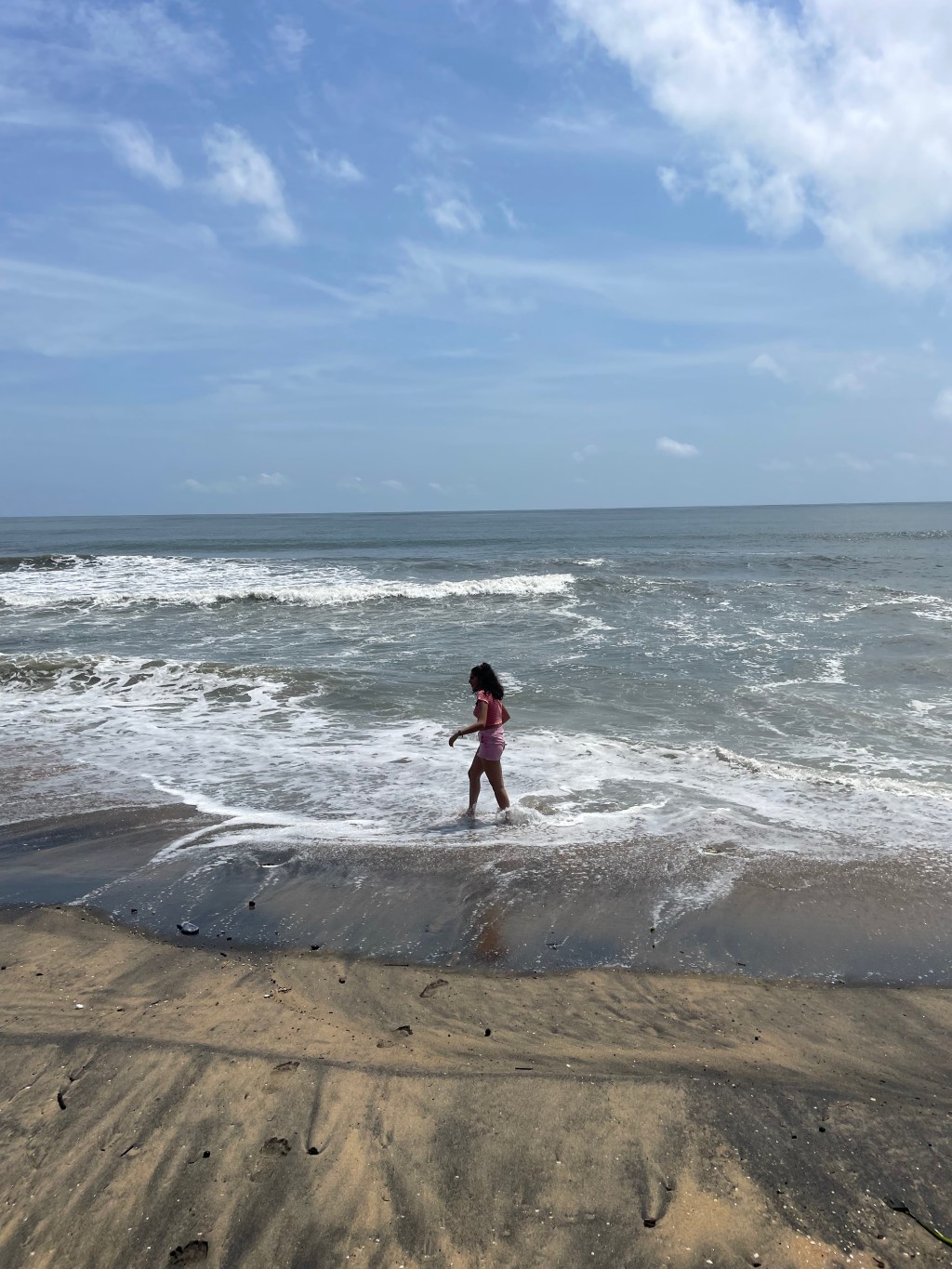
I am in a new place. The living room is emptier than I’d like. My hair is doing what Bombay hair does. The sea is faintly present in the air in a way that is both good and slightly fishy and very real, which is, I think, a perfectly accurate description of Bombay itself.
I’ll go out more. I’ll put things on the walls. I’ll find the samosa, eventually, though Lucknow has made me difficult about samosas and Bombay will have to work for that particular loyalty. Ek jagah, phir doosri, phir teesri and somewhere in that accumulation, without me noticing exactly when, the city will stop being mid-sentence and start being mine.
This is the part I know now, that I didn’t know the first time: it always happens. Not immediately, not on command, not because you want it to. But eventually, reliably, a city gives you a corner. And the corner gives you something back. And you belong, a little, and then more, and then one day you’re someone’s regular and the city has your name in a few places and you didn’t notice it happening because you were too busy just living in it.
Bombay doesn’t know me yet.
But I’m here now. I’ve seen its Monday. I know what it looks like when it isn’t performing.
The conversation has started and I walked in mid-sentence which, honestly, is exactly how I prefer to arrive anywhere.



 The Devil is in the Dee-tails :)
Leave a comment